AJIRSS: Asian Journal of Innovative Research in Social Science
Home - Journal - AJIRSS: Asian Journal of Innovative Research in Social Science
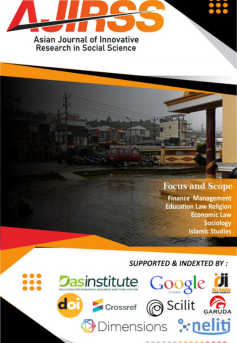
Asian Journal of Innovative Research in Social Science
Asian Journal of Innovative Research in Social Science is an official journal of DAS Institute. It is an open-access online scientific journal. It publishes original scientific outputs. It neither accepts nor commissions third-party content.
Recognized internationally as the leading peer-reviewed interdisciplinary journal devoted to the publication of original papers, it serves as a forum for practical approaches to improving quality on issues about social science, humanities, and its related fields.
Asian Journal of Innovative Research in Social Science is now published in English or Arabic and is open for submission by authors worldwide. It is currently published every three months.
SCOPE
- SOCIAL SCIENCES
- Consumer and family economics
- Finance
- Management
- Education
- Law
- Media and communication studies
- Political sciences and public policy
- Population studies
- Psychology
- Religion
- Islamic Law
- Sociology
- Tourism
- HUMANITIES
- Arts and Culture
- Dance
- Language and linguistics
- Literature
- Music
- Philosophy
- Sports
Focus and Scope
Focus and Scope for the Asian Journal of Innovative Research in Social Science:
The Asian Journal of Innovative Research in Social Science (AJIRSS) aims to provide a platform for scholars, researchers, and practitioners to contribute to the advancement of knowledge in the field of social sciences. AJIRSS welcomes original and innovative research articles that explore various dimensions of social science disciplines with a particular focus on Asian societies. The journal’s scope encompasses, but is not limited to, the following areas:
Sociological Perspectives: The journal invites research investigating social structures, institutions, and processes, including social change, social stratification, social inequality, social movements, and social behavior patterns within Asian societies.
Cultural Studies: AJIRSS welcomes studies that examine cultural practices, beliefs, values, traditions, and their impact on individual and collective identities, social relations, and cultural transformations across Asian communities.
Anthropological Inquiries: The journal encourages research that explores the diverse cultural, social, and historical aspects of Asian societies through ethnographic studies, archaeological investigations, linguistic analyses, and other anthropological approaches.
Political Science and International Relations: AJIRSS seeks contributions that analyze political systems, governance structures, policy-making processes, political behavior, and international relations dynamics in Asian contexts. Comparative studies involving Asian countries are particularly encouraged.
Economic and Development Studies: The journal invites research on economic theories, development strategies, globalization, economic policies, sustainable development, and regional economic integration within Asian economies.
Psychological and Behavioral Studies: AJIRSS welcomes research investigating psychological processes, individual and group behavior, attitudes, personality, cognitive processes, and mental health issues in Asian populations.
Education and Social Work: AJIRSS encourages studies focusing on educational policies, pedagogical practices, curriculum development, educational technologies, social work interventions, and community development initiatives in Asian contexts.
Gender Studies and Social Justice: The journal invites research that explores gender dynamics, gender roles, gender equality, and social justice issues related to various marginalized groups within Asian societies.
Environmental and Sustainability Studies: AJIRSS seeks research that addresses environmental challenges, climate change, natural resource management, sustainable development, and environmental policies in Asian regions.
Methodological and Theoretical Advances: The journal welcomes articles that discuss innovative research methodologies, theoretical frameworks, and interdisciplinary approaches to studying social phenomena in Asian contexts.
AJIRSS aims to promote interdisciplinary research and encourage contributions from diverse perspectives to enhance understanding of social issues and foster social innovation within Asian societies. The journal welcomes empirical studies, theoretical analyses, critical reviews, case studies, and policy-oriented papers that make a significant scholarly contribution to the field of social sciences.
Peer Review Process
The Peer Review Process
The peer review process can be broadly summarized into 9 steps, although these steps can vary slightly between journals. Explore what’s involved, below.
Editor Feedback: “Reviewers should remember that they are representing the readers of the journal. Will the readers of this particular journal find this informative and useful?”
1. Submission of Paper
The corresponding or submitting author submits the paper to the journal. This is usually via an online system. Occasionally, journals may accept submissions by email.
2. Editorial Office Assessment
The Editorial Office checks that the paper adheres to the requirements described in the journal’s Author Guidelines. The quality of the paper is not assessed at this point.
3. Appraisal by the Editor-in-Chief (EIC)
The EIC checks assess the paper, considering its scope, originality and merits. The EiC may reject the paper at this stage.
4. Invitation to Reviewers
The handling editor sends invitations to individuals he or she believes would be appropriate reviewers. As responses are received, further invitations are issued, if necessary, until the required number of reviewers is secured– commonly this is 2, but there is some variation between journals.
5. Response to Invitations
Potential reviewers consider the invitation against their expertise, conflicts of interest and availability. They then accept or decline the invitation to review. If possible, when declining, they might also suggest alternative reviewers.
6. Review is Conducted
The reviewer sets time aside to read the paper several times. The first read is used to form an initial impression of the work. If major problems are found at this stage, the reviewer may feel comfortable rejecting the paper without further work. Otherwise, they will read the paper several more times, taking notes to build a detailed point-by-point review. The review is then submitted to the journal, with the reviewer’s recommendation (e.g. to revise, accept or reject the paper).
7. Journal Evaluates the Reviews
The handling editor considers all the returned reviews before making a decision. If the reviews differ widely, the editor may invite an additional reviewer to get an extra opinion before making a decision.
8. The Decision is Communicated
The editor sends a decision email to the author including any relevant reviewer comments. Comments will be anonymous if the journal follows a single-anonymous or double-anonymous peer review model. Journals following an open or transparent peer review model will share the identities of the reviewers with the author(s).
9. Next Steps
If accepted, the paper is sent to production. If the article is rejected or sent back for either major or minor revision, the handling editor should include constructive comments from the reviewers to help the author improve the article. At this point, reviewers should also be sent an email or letter letting them know the outcome of their review. If the paper was sent back for revision, the reviewers should expect to receive a new version, unless they have opted out of further participation. However, where only minor changes were requested this follow-up review might be done by the handling editor.
Publication Ethic
| Asian Journal of Innovative Reasearch in Social Science (AJIRSS) is a peer-reviewed national journal, available in print and online and published two times a year. This statement clarifies ethical behaviour of all parties involved in the act of publishing an article in this journal, including the author, the chief editor, the Editorial Board, the peer-reviewer and the publisher DAS Institute. This statement is based on COPE’s Best Practice Guidelines for Journal Editors. |
| Ethical Guideline for Journal Publication |
| The publication of an article in a peer-reviewed Asian Journal of Innovative Reasearch in Social Science (AJIRSS) is an essential building block in the development of a coherent and respected network of knowledge. It is a direct reflection of the quality of the work of the authors and the institutions that support them. Peer-reviewed articles support and embody the scientific method. It is therefore important to agree upon standards of expected ethical behavior for all parties involved in the act of publishing: the author, the journal editor, the peer reviewer, the publisher and the society. DAS Institute as publisher of Asian Journal of Innovative Reasearch in Social Science (AJIRSS) takes its duties of guardianship over all stages of publishing seriously and we recognize our ethical and other responsibilities. We are committed to ensuring that advertising, reprint or other commercial revenue has no impact or influence on editorial decisions. |
| Publication Decisions |
| The editor of the Asian Journal of Innovative Reasearch in Social Science (AJIRSS) is responsible for deciding which of the articles submitted to the journal should be published. The validation of the work in question and its importance to researchers and readers must always drive such decisions. The editors may be guided by the policies of the journal’s editorial board and constrained by such legal requirements as shall then be in force regarding libel, copyright infringement and plagiarism. The editors may confer with other editors or reviewers in making this decision. |
| Fair Play |
| An editor at any time evaluate manuscripts for a) economics, b) law, c) communication, d) education, and e) application of technology. |
| Confidentiality |
| The editor and any editorial staff must not disclose any information about a submitted manuscript to anyone other than the corresponding author, reviewers, potential reviewers, other editorial advisers, and the publisher, as appropriate. |
| Disclosure and Conflicts of Interest |
| Unpublished materials disclosed in a submitted manuscript must not be used in an editor’s own research without the express written consent of the author. |
| Duties of Reviewers |
| Contribution to Editorial Decisions Peer review assists the editor in making editorial decisions and through the editorial communications with the author may also assist the author in improving the paper. Promptness Any selected referee who feels unqualified to review the research reported in a manuscript or knows that its prompt review will be impossible should notify the editor and excuse himself from the review process. Confidentiality Any manuscripts received for review must be treated as confidential documents. They must not be shown to or discussed with others except as authorized by the editor. Standards of Objectivity Reviews should be conducted objectively. Personal criticism of the author is inappropriate. Referees should express their views clearly with supporting arguments. Acknowledgement of Sources Reviewers should identify relevant published work that has not been cited by the authors. Any statement that an observation, derivation, or argument had been previously reported should be accompanied by the relevant citation. A reviewer should also call to the editor’s attention any substantial similarity or overlap between the manuscript under consideration and any other published paper of which they have personal knowledge. Disclosure and Conflict of Interest Privileged information or ideas obtained through peer review must be kept confidential and not used for personal advantage. Reviewers should not consider manuscripts in which they have conflicts of interest resulting from competitive, collaborative, or other relationships or connections with any of the authors, companies, or institutions connected to the papers. |
| Duties of Authors |
| Reporting standards Authors of reports of original research should present an accurate account of the work performed as well as an objective discussion of its significance. Underlying data should be represented accurately in the paper. A paper should contain sufficient detail and references to permit others to replicate the work. Fraudulent or knowingly inaccurate statements constitute unethical behaviour and are unacceptable. Originality and Plagiarism The authors should ensure that they have written entirely original works, and if the authors have used the work and/or words of others that this has been appropriately cited or quoted. Multiple, Redundant or Concurrent Publication An author should not in general publish manuscripts describing essentially the same research in more than one journal or primary publication. Submitting the same manuscript to more than one journal concurrently constitutes unethical publishing behaviour and is unacceptable. Acknowledgement of Sources Proper acknowledgment of the work of others must always be given. Authors should cite publications that have been influential in determining the nature of the reported work. Authorship of the Paper Authorship should be limited to those who have made a significant contribution to the conception, design, execution, or interpretation of the reported study. All those who have made significant contributions should be listed as co-authors. Where there are others who have participated in certain substantive aspects of the research project, they should be acknowledged or listed as contributors. The corresponding author should ensure that all appropriate co-authors and no inappropriate co-authors are included on the paper, and that all co-authors have seen and approved the final version of the paper and have agreed to its submission for publication. Disclosure and Conflicts of Interest All authors should disclose in their manuscript any financial or other substantive conflict of interest that might be construed to influence the results or interpretation of their manuscript. All sources of financial support for the project should be disclosed. Fundamental errors in published works When an author discovers a significant error or inaccuracy in his/her own published work, it is the author’s obligation to promptly notify the journal editor or publisher and cooperate with the editor to retract or correct the paper. |
Author Guidelines
Thank you for considering our journal for the publication of your research in the field of social sciences. To ensure a smooth and efficient submission process, please adhere to the following guidelines:
Manuscript Preparation:
- Manuscripts should be written in English and follow a clear, concise, and coherent writing style.
- Use a standard font (e.g., Times New Roman or Arial) with a font size of 12 points.
- Double-space the entire manuscript, including references, tables, and figures.
- Number all pages consecutively.
Title Page:
- The title page should include the title of the manuscript, names and affiliations of all authors, and corresponding author’s contact information (e.g., email address).
- Provide a short running title (not exceeding 50 characters).
Abstract and Keywords:
- Include an abstract of no more than 250 words summarizing the main objectives, methods, results, and conclusions of the study.
- Provide 3 to 6 keywords that accurately reflect the content of the manuscript.
Introduction:
- Clearly state the objectives and purpose of the study.
- Provide a concise review of the relevant literature and establish the theoretical framework for the research.
Methods:
- Describe the research design, data collection procedures, and analytical methods employed.
- Provide sufficient detail to enable replication of the study.
- Clearly identify any ethical considerations and approval obtained for human subjects research.
Results:
- Present the findings of the study in a logical and organized manner.
- Use tables, figures, and graphs where appropriate to enhance clarity.
- Avoid duplicating information provided in tables or figures within the text.
Discussion:
- Interpret the results and relate them to the research objectives.
- Discuss the implications of the findings and their contribution to the field.
- Address the limitations of the study and suggest future research directions.
Conclusion:
- Summarize the main findings and their significance.
- Avoid introducing new information or repeating what has already been stated.
References:
- Follow a recognized citation style American Psychological Association – 7th (APA) consistently throughout the manuscript.
- Cite only relevant and reliable sources, and ensure all references are listed in the reference section.
Supplementary Materials:
- If applicable, include any supplementary materials (e.g., datasets, survey instruments) to support and enhance the research.
Manuscript Submission:
- Submit your manuscript electronically through our online submission system.
- Ensure all required documents are included (e.g., manuscript, title page, abstract, keywords) in a single file (preferably in ms.word format).
Peer Review Process:
- All manuscripts will undergo a rigorous peer-review process to ensure the highest quality of published articles.
- Expect feedback and recommendations from reviewers, which should be addressed appropriately in the revised manuscript.
Please note that these guidelines serve as general instructions. For detailed information regarding formatting, style, and specific requirements, please refer to the journal’s website or contact the editorial office directly.
We look forward to receiving your submission and contributing to the advancement of social science research. Should you have any further inquiries, please do not hesitate to reach out to us.
Editorial Team
Editor in Chief
Toufan Aldian Syah, Scopus ID: 58314078800, Universitas Islam Negeri Sunan Kalijaga, Yogyakarta, Indonesia
Editorial Team
Dr. Muhammad Abdurrahman Munir, Scopus ID: 57210343162, Universitas Malaysia Serawak, Malaysia
Galih Albarra Shidiq, Ph.D, Chulalongkorn University, Thailand
Dr. Asep Sunarko, Sinta ID: 6643687, Universitas Sains Qur’an, Wonosobo, Indonesia
Dr. Apik Intan Saputri, Sinta ID: 6756165, STAIA Al-Hikmah 2, Brebes, Indonesia
Waliko, Sinta ID: 6086519, UIN Prof. K.H. Saifuddin Zuhri, Purwokerto, Indonesia
Reviewer
Naerul Edwin Kiky Aprianto, Sinta ID: 6751120, UIN Prof. K.H. Saifuddin Zuhri, Purwokerto, Indonesia
Assoc. Prof. Akhmad Faozan, Sinta ID: 6081464, UIN Prof. K.H. Saifuddin Zuhri, Purwokerto, Indonesia
Prof. Nur Muhammad Kasim, Scopus ID: , Universitas Gorontalo, Indonesia
Prof. Abdul Basit, Scopus ID: 57200020879 , UIN Prof. K.H. Saifuddin Zuhri, Purwokerto, Indonesia.
Assoc. Prof. Sutarmin, Scopus ID: 57191952910, Universitas Peradaban, Indonesia
Dr. Muhammad Abdurrahman Munir, Scopus ID: 57210343162, Universitas Malaysia Serawak, Malaysia
Prof. Dr. Nur Muhammad Kasim, Universitas Gorontalo, Indonesia
International Advisory Board (IAB)
The International Advisory Board (IAB) is composed of respected academics from different geographic regions who support the editors to develop and strengthen the journal in the international educational technology research community. The IAB provides advice on major decisions and key policy areas, especially the strategic direction of the journal.
IT Support
Agus Darmawan, M.Cs., Universitas Gajah Mada, Yogyakarta, Indonesia
Reviewers
Naerul Edwin Kiky Aprianto, Sinta ID: 6751120, UIN Prof. K.H. Saifuddin Zuhri, Purwokerto, Indonesia
Assoc. Prof. Akhmad Faozan, Sinta ID: 6081464, UIN Prof. K.H. Saifuddin Zuhri, Purwokerto, Indonesia
Prof. Nur Muhammad Kasim, Scopus ID: , Universitas Gorontalo, Indonesia
Prof. Abdul Basit, Scopus ID: 57200020879 , UIN Prof. K.H. Saifuddin Zuhri, Purwokerto, Indonesia.
Assoc. Prof. Sutarmin, Scopus ID: 57191952910, Universitas Peradaban, Indonesia
Dr. Muhammad Abdurrahman Munir, Scopus ID: 57210343162, Universitas Malaysia Serawak, Malaysia
Prof. Dr. Nur Muhammad Kasim, Universitas Gorontalo, Indonesia
Author Fees
Article Processing Charge
100.000 (IDR) (for Indonesian authors) and $10 (for foreign authors). If this paper is accepted for publication, you will be asked to pay an Article Publication Fee to cover publications costs.
Open Access Policy
This journal provides immediate open access to its content on the principle that making research freely available to the public, supports a greater global exchange of knowledge. This journal is open access journal, which means that all content is freely available without charge to users or institutions. Users are allowed to read, download, copy, distribute, print, search, or link to full text articles in this journal without asking prior permission from the publisher or author. This is in accordance with the Budapest Open Access Initiative.
Contact
Contact
Perum Palm Estate No. 6A, Penambongan, Purbalingga, Jawa Tengah, Indonesia
53314